
Use more light! – studio lighting basics
Starting to work with light can be challenging. This practical course explains the fundamentals of studio lighting in an accessible, hands-on way.
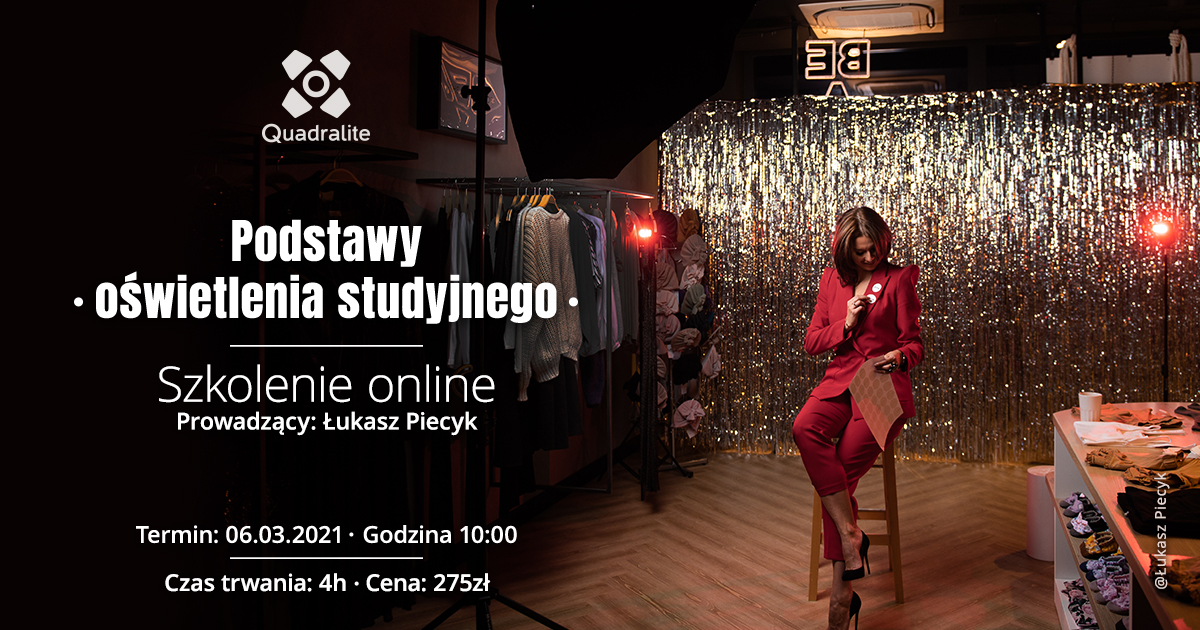
Starting to work with light can be challenging, and the number of names and functions found in studio equipment can feel overwhelming. Instead of reading yet another guide, join our practical training course on studio lighting basics and learn how to work with light in an enjoyable way.
During the 4-hour meeting you will:
- discover professional studio-photography techniques through practical examples,
- learn how to use light consciously for better results,
- understand the functions and possibilities of studio equipment,
- learn inexpensive ways to create a “wow effect” in photographs.
Why take part in a studio-lighting basics course?
- learn practical tricks for creating strong images,
- work in a small group with direct interaction with the instructor,
- receive a course completion certificate,
- stay in contact with the instructor and participants after the course,
- have the option of attending an in-person session later if needed,
- accelerate your development as a studio photographer or blogger.
The course is intended for:
- photographers and enthusiasts beginning their adventure with studio photography,
- photographers already working in the studio who want to refresh or expand their lighting knowledge,
- people considering setting up their own studio.
*Quadralite lights, modifiers and accessories will be used during the course.*
Training plan
1. Introduction, brief presentation and webinar rules
2. Why do we need flash?
2.1 Controlling the conditions
2.2 Making images more attractive
2.3 Achieving effects unavailable with ordinary means
2.4 Improving existing conditions
3. Which flash should I buy?
3.1 Speedlights
3.2 Studio flashes
3.3 Outdoor flashes
3.4 Guide number versus watt-seconds
4. How to trigger flash?
4.1 Optical slave
4.2 Cable
4.3 Radio
5. How to set the camera for a given mode?
5.1 TTL and Manual
5.2 HSS and short flash durations
6. Why use modifiers?
6.1 Umbrella
6.2 Softbox
6.3 Beauty Dish
6.4 Other modifiers
7. Is using no modifier a mistake?
7.1 Hard light
7.2 Reflected light
8. What else do we need for flash photography?
8.1 Stand
8.2 Useful accessories
9. Basic lighting setups
9.1 Key, fill and kicker light
9.2 One light
9.3 Light + reflector
9.4 Two-light setup
9.5 Is more always better?
10. Inexpensive ways to create an attractive photograph
Instructor
Łukasz Piecyk: has worked in the photographic industry for seven years and is a former radio and press journalist. He compares his experience in nationwide agencies to being a jack of all trades: *“a portrait here, reportage there; sometimes terribly boring, elsewhere so much happens that you do not know where to point the lens. In short, a kaleidoscope. It is a true training ground that lets you gain experience in many areas of photography.”*
He also runs the YouTube channel “Piec od kuchni”, where he shares his photographic experience.
Registration link: <https://app.evenea.pl/event/podstawy-oswietlenia-studyjnego/>