The model first
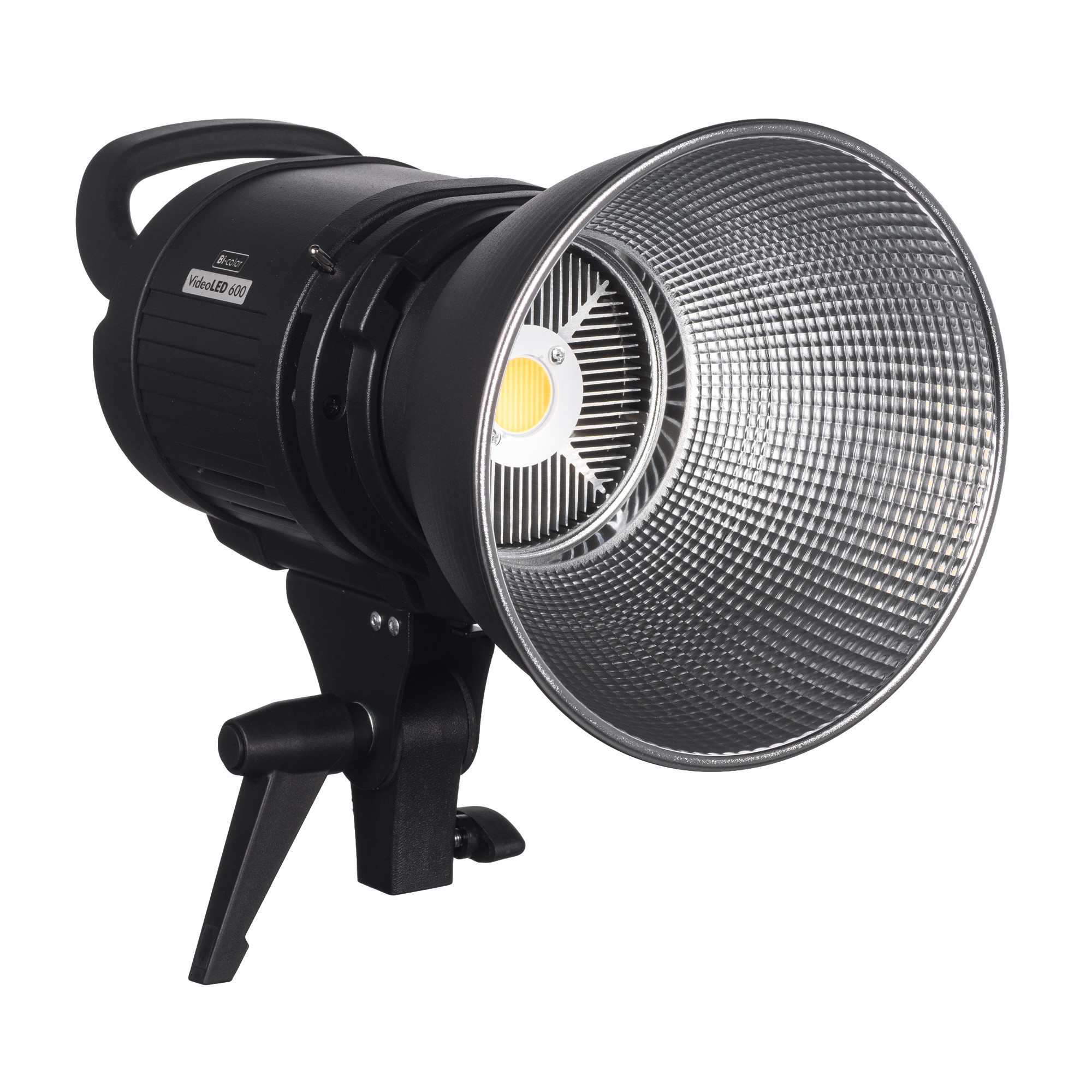
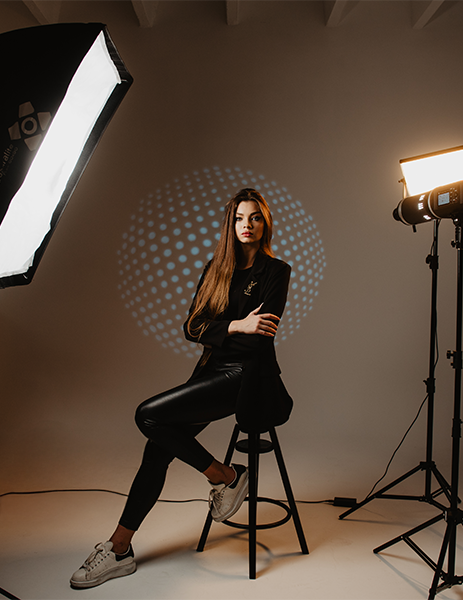
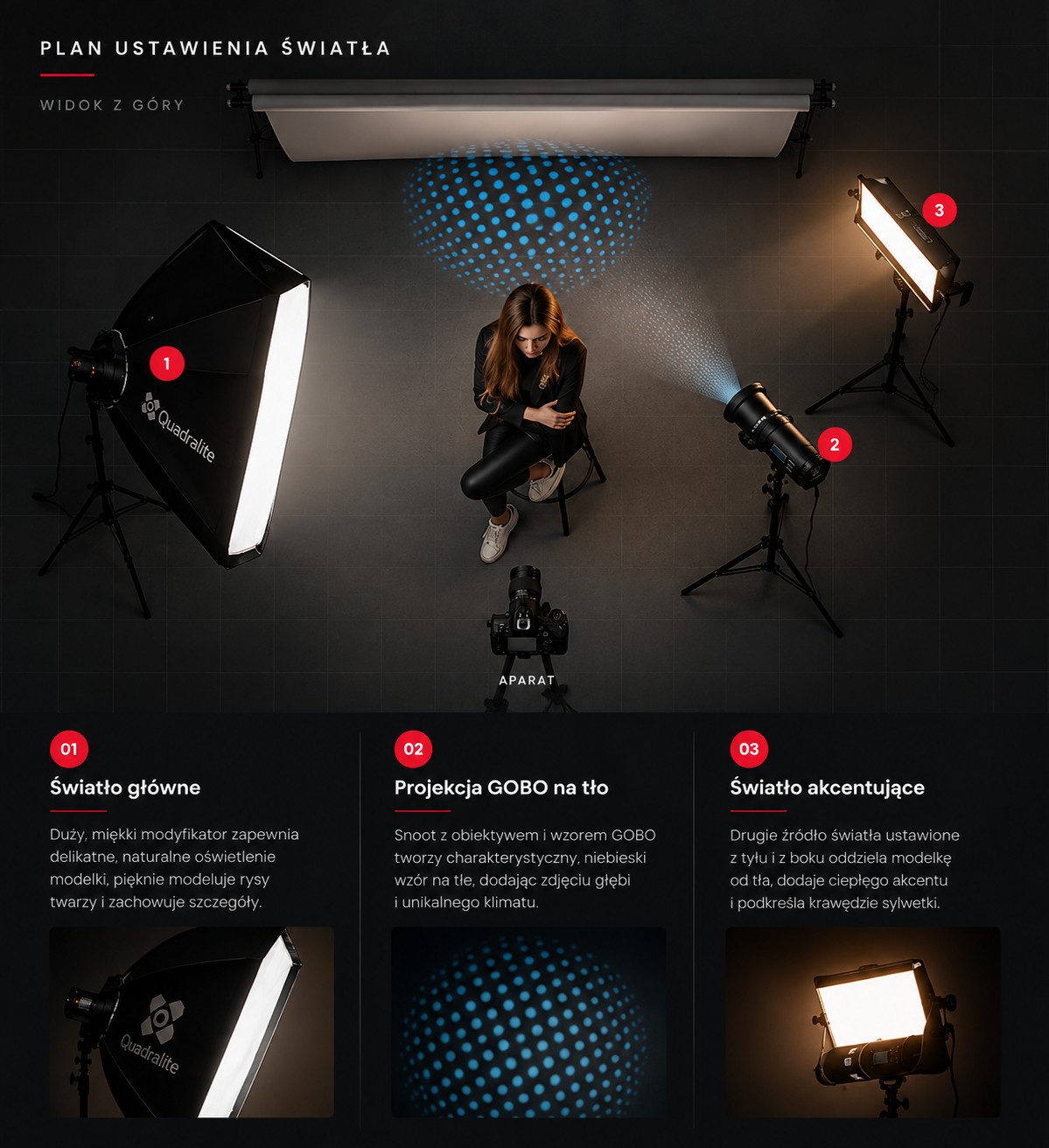
The main light was positioned from the side and softened with a large modifier. As a result, gentle tonal transitions appear on the face, while the image retains its sense of depth.
This is an important element of the entire shoot. Soft light does not have to mean a flat portrait. Its character is determined not only by the size of the source, but also by its direction, height, and distance from the person being photographed.
The second light source helps separate the silhouette from the surroundings and adds a warmer accent to the scene. As a result, the black styling retains its depth while avoiding blending into the rest of the frame.
A background that becomes part of the photograph
The most distinctive element of the photograph is the blue, regular pattern appearing directly behind the model.
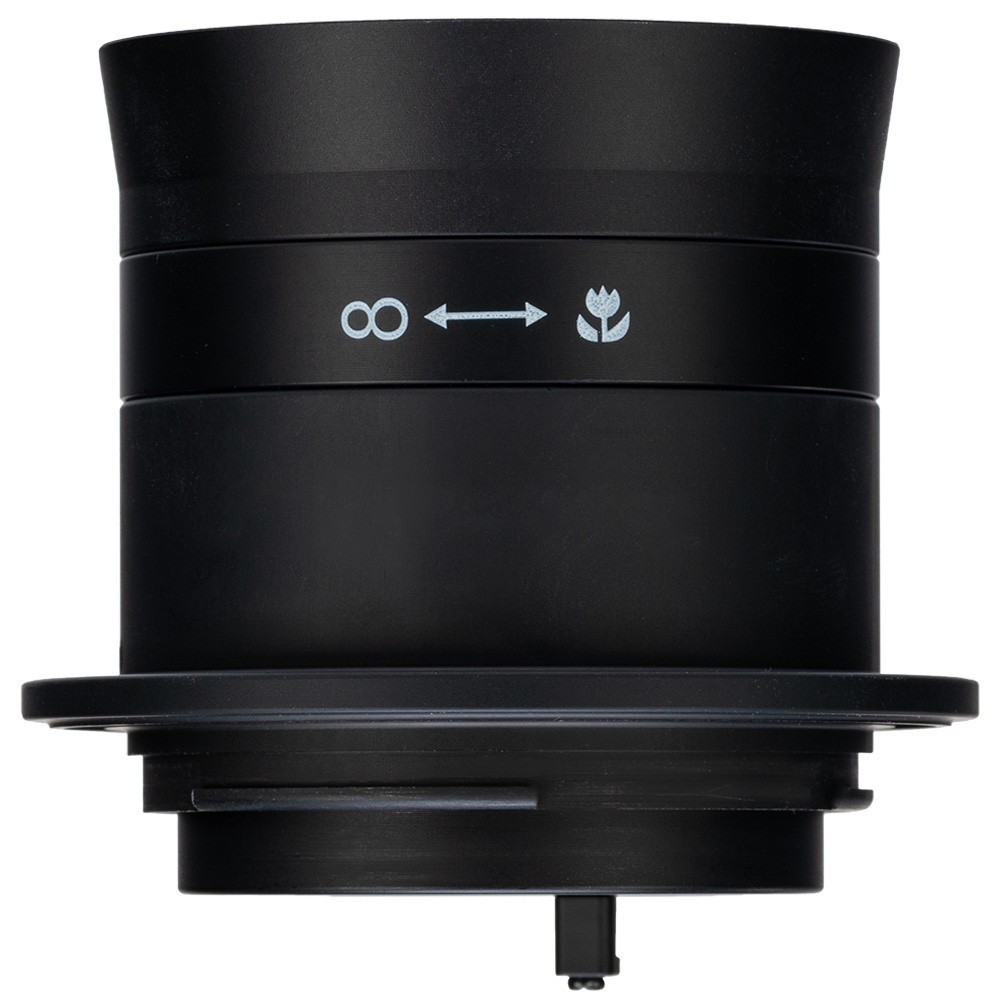
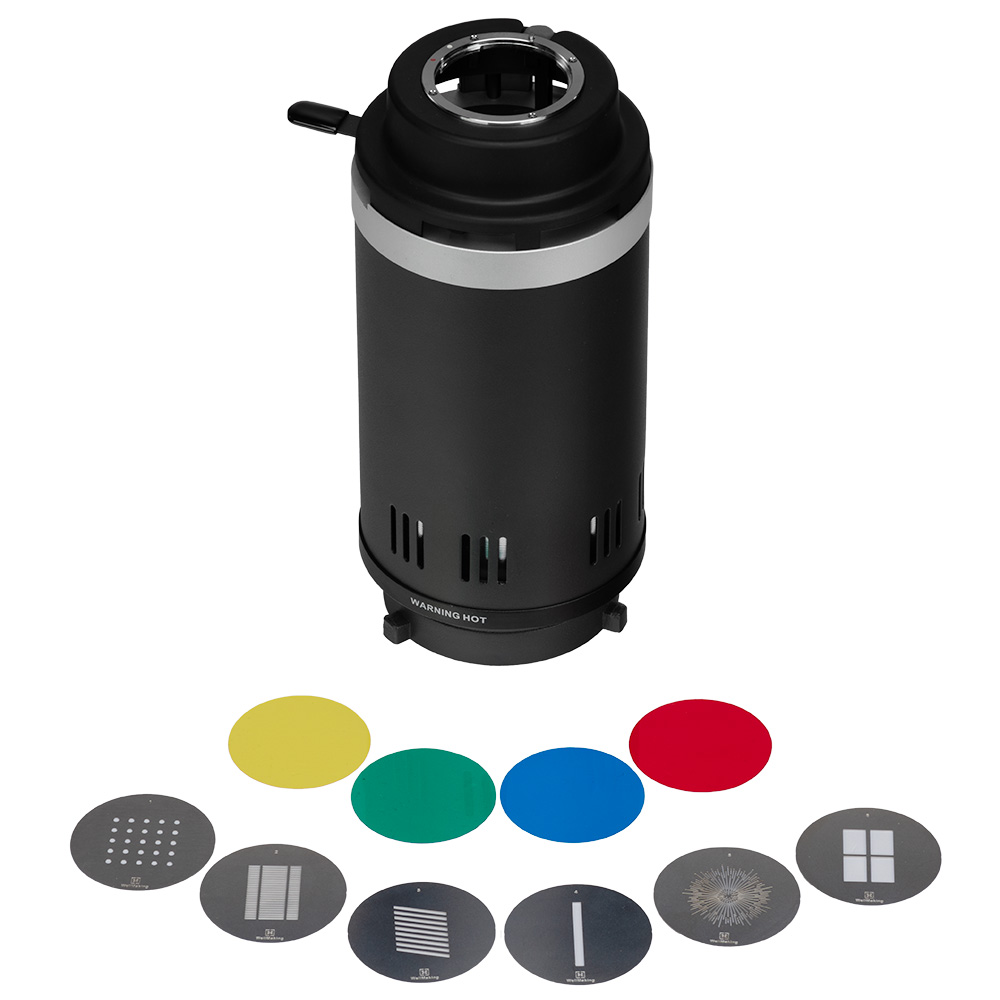
Instead of building an elaborate set, projection light and a GOBO pattern were used. This is a simple way to completely change the character of a uniform background. The light creates an additional layer of the image without competing with the portrait subject.
The cool blue was combined with the warmer color palette of the rest of the scene. This contrast in color temperatures makes the photograph feel more dimensional and visually more engaging.
Each light has its own task
In this frame, the individual sources do not compete with one another. One is responsible for shaping the subject, another builds separation and mood, and the next works exclusively on the background.
This is exactly the kind of approach that allows you to maintain control over the image. Instead of trying to light the entire scene with one source, you can break it down into several elements and treat each one separately.
The final result therefore does not come from the number of lights used, but from consciously assigning them specific roles.
A simple studio, many possibilities
This shoot clearly shows that an impressive portrait does not require complex set design. A neutral background, a carefully considered model setup, and light that not only illuminates but also projects space are enough.
Changing the GOBO pattern, the color of the light, the position of the main source, or the ratios between the individual lamps would make it possible to create many completely different photographs on the same set.
And that is precisely the greatest advantage of a well-planned studio. The equipment provides the possibilities, but the final character of the photograph only emerges when each light source is given its own specific task.